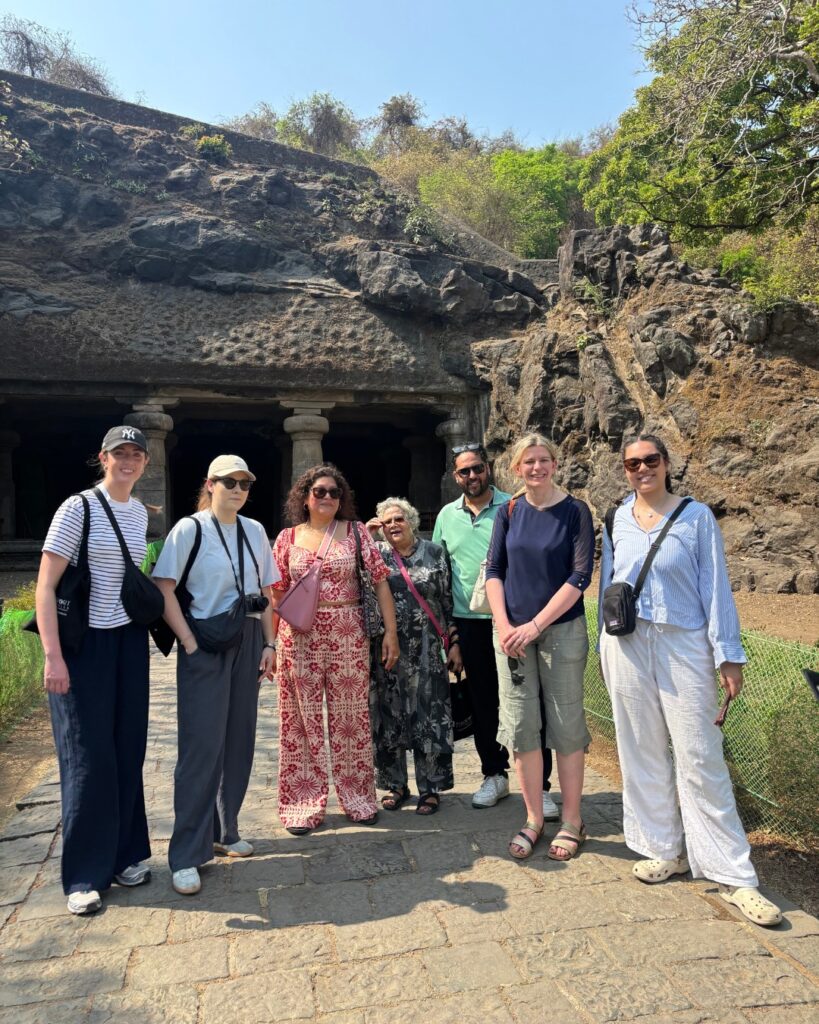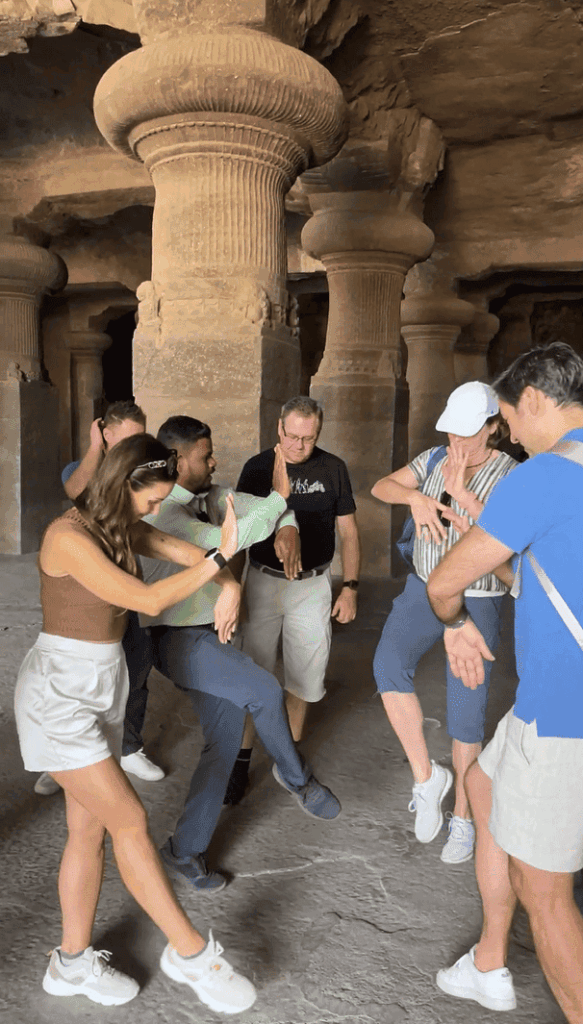
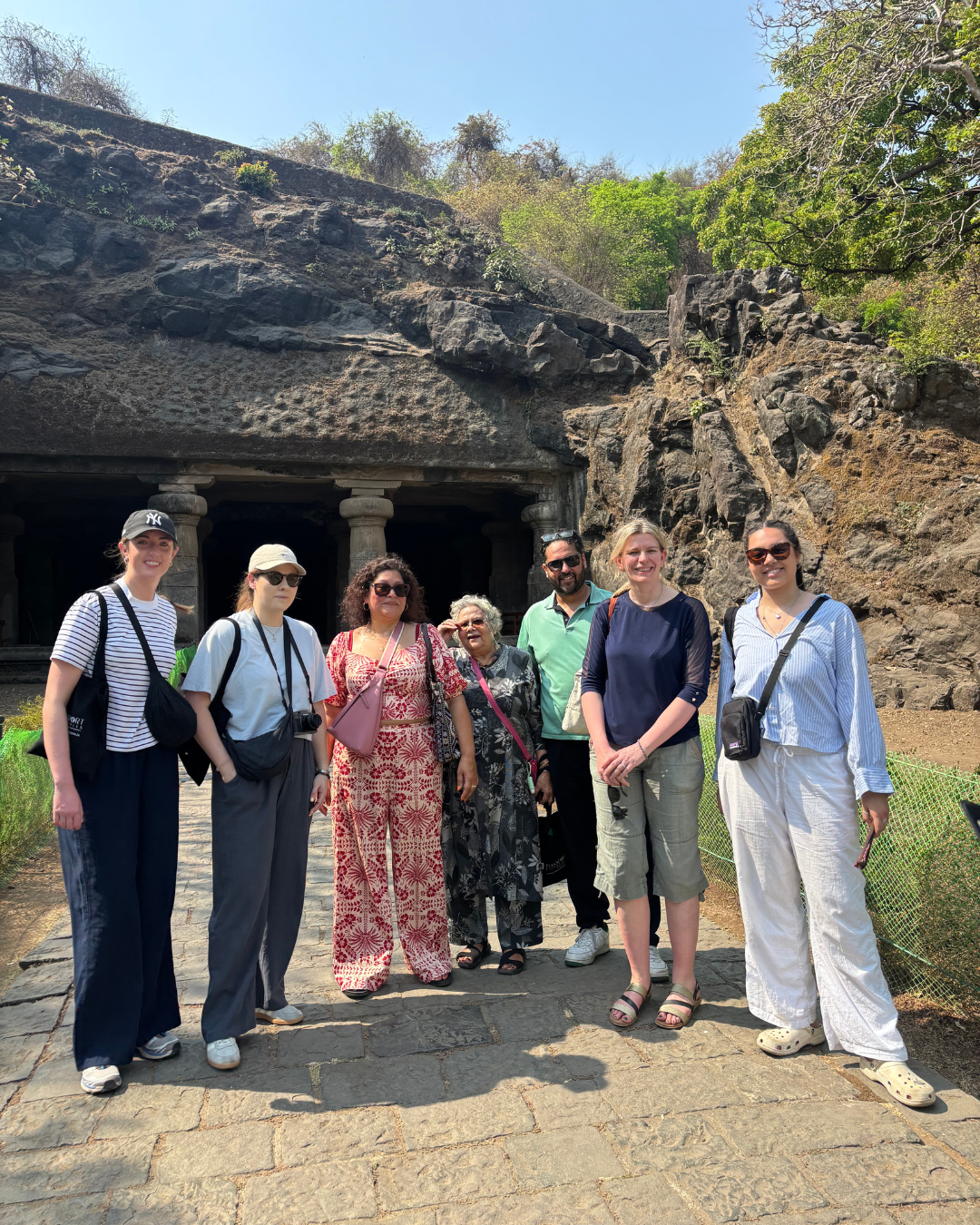
A visit to Elephanta Caves is very different from conventional sightseeing in Mumbai.
You are travelling to an island, walking through an outdoor heritage landscape, climbing towards an ancient rock-cut cave complex, and exploring a monument that has survived for centuries.
A little preparation can therefore make a significant difference.
Comfortable footwear matters.
Weather matters.
Hydration matters.
And knowing what to expect between arriving on Elephanta Island and reaching Cave 1 can help you enjoy the experience rather than feeling rushed or unprepared.
This practical guide covers what to wear, what to carry, how much walking to expect and how to approach Elephanta respectfully.
Why Preparation Matters at Elephanta Caves
Elephanta is not a modern indoor attraction.
The caves are located on Elephanta Island, historically known as Gharapuri, within Mumbai Harbour.
After reaching the island, visitors continue from the jetty towards the cave complex and climb towards the principal archaeological area.
Maharashtra Tourism specifically advises visitors to wear comfortable shoes, carry water and use sun protection when visiting the site.
That means the experience combines:
- a marine journey,
- an island arrival,
- walking,
- an uphill approach,
- outdoor exposure,
- historic stone surfaces,
- and time inside the cave complex.
Planning for those conditions makes the day much easier.
What Should You Wear to Elephanta Caves?
1. Comfortable Walking Shoes
This is probably the single most important clothing decision.
Choose footwear that you would comfortably wear for several hours of walking.
Good options include:
- supportive walking shoes,
- trainers,
- comfortable travel shoes,
- or securely fastened sandals with suitable grip.
Avoid choosing footwear purely for photographs.
The approach to the caves involves steps and historic surfaces, so stability matters more than appearance.
Maharashtra Tourism also recommends comfortable shoes for navigating the island and cave area.
2. Lightweight, Breathable Clothing
Mumbai can be warm and humid for significant parts of the year.
Lightweight clothing generally makes the island visit more comfortable.
Consider:
- breathable cotton,
- linen,
- lightweight travel fabrics,
- loose-fitting shirts,
- and comfortable trousers or shorts appropriate for a heritage site.
The objective is simple:
Wear something that allows you to walk comfortably without becoming unnecessarily hot.
3. A Hat or Cap
Parts of the island journey are outdoors.
A hat or cap can therefore be useful, particularly during brighter or warmer periods.
It is a small item that can make a noticeable difference during the approach to the caves.
4. Sunglasses
Sunglasses are useful during the outdoor sections of the experience and during the island approach.
Once you enter the cave complex, naturally, they will no longer be necessary.
What Should You Carry to Elephanta Caves?
You do not need to arrive with a large daypack.
In fact, travelling relatively light usually makes the experience easier.
A small bag containing practical essentials is normally enough.
Water
Carry drinking water.
The combination of outdoor walking, steps and Mumbai’s climate means hydration should not be an afterthought.
Maharashtra Tourism specifically recommends carrying water during a visit.
Sun Protection
Consider carrying:
- sunscreen,
- a hat,
- sunglasses,
- and any personal sun-protection products you normally use.
This is particularly useful during the exposed outdoor portions of the visit.
Phone or Camera
Elephanta provides many photographic opportunities.
These include:
- the island landscape,
- cave architecture,
- stone columns,
- sculptural details,
- pathways,
- and views during the journey.
Always follow current monument photography rules and respect any signs or instructions at the site.
Small Personal Essentials
Depending on your needs, consider:
- tissues,
- hand sanitiser,
- essential medication,
- a compact umbrella during relevant weather,
- and a small power bank.
Keep the bag light.
You will appreciate the difference during the uphill sections.
What Should You Leave Behind?
Avoid carrying more than you realistically need.
Large or heavy bags can become inconvenient during the island walk and cave visit.
You generally do not need:
- unnecessary luggage,
- multiple heavy camera bags,
- large shopping bags,
- or excessive amounts of food and equipment.
Think of Elephanta as a walking heritage excursion.
Pack accordingly.
How Much Walking Is Involved?
One of the most important things first-time visitors should understand is that reaching Elephanta Island is not the end of the journey.
Once on the island, visitors still need to make their way towards the cave complex.
Maharashtra Tourism describes the visit as involving a climb up steps towards the cave entrance.
UNESCO also notes that visitor infrastructure has included pathways and flights of steps leading from the island’s jetty towards the caves.
Visitors should therefore expect:
- walking from the arrival area,
- an island approach,
- an uphill section,
- steps,
- time standing inside the caves,
- walking across historic surfaces,
- and a descent afterwards.
This is manageable for many visitors but should not be underestimated.
What If You Are Travelling With Senior Guests?
Age itself is not necessarily the deciding factor.
Mobility, balance, walking ability, heat tolerance and comfort with steps are more important.
A fit senior traveller may be perfectly comfortable at Elephanta.
Another guest may find the uphill approach challenging.
If anyone in your party has:
- knee problems,
- reduced stamina,
- balance difficulties,
- limited mobility,
- or concerns about steps,
discuss those requirements before travelling.
We have a separate detailed resource specifically for this:
Elephanta Caves for Senior Travellers: Accessibility & Comfort Guide
Keeping accessibility advice on its own dedicated page allows travellers with specific mobility concerns to find much more detailed information.
Should You Visit Early in the Day?
For many travellers, an earlier visit can be comfortable.
Maharashtra Tourism recommends visiting early in the morning to avoid larger crowds and experience the carvings in a more peaceful setting.
An earlier visit may also help travellers manage the outdoor walking portions before the day becomes warmer.
However, marine operations, weather and individual schedules can vary.
Your actual departure should therefore be planned around current operating conditions rather than assuming one time works every day.
Elephanta Caves Are Closed on Mondays
This is an important planning point.
Maharashtra Tourism states that Elephanta Caves are open to visitors on other days but closed on Mondays.
Before building Elephanta into your Mumbai itinerary, make sure the date works.
A surprising number of travellers first discover the Monday closure after the rest of their itinerary has already been organised.
Respect the Heritage Site
Elephanta is not simply a scenic attraction.
It is an internationally recognised cultural monument with extraordinary archaeological, artistic and religious significance.
UNESCO inscribed Elephanta Caves on the World Heritage List in 1987.
Maharashtra Tourism specifically advises visitors to respect the religious significance of the caves and avoid behaviour that could damage or deface the sculptures.
That means:
- do not touch carvings unnecessarily,
- do not mark or scratch stone,
- follow barriers and signage,
- follow instructions from monument staff,
- avoid disruptive behaviour,
- and remember that the space carries cultural significance beyond tourism.
Respectful tourism helps preserve the monument for future visitors.
Why You Should Avoid Rushing Through Cave 1
Elephanta is often treated as another item on a Mumbai sightseeing checklist.
That is a mistake.
Cave 1 contains some of the most important sculptural works at the site.
UNESCO highlights the monumental Sadashiva together with representations such as Nataraja, Ardhanarishvara, Yogishvara, Gangadhara and other Shiva-related reliefs as central to the site’s importance.
Rather than walking directly to the famous Trimurti, taking a photograph and leaving, allow time to look around.
Observe:
- the arrangement of columns,
- the scale of the panels,
- facial expressions,
- architectural proportions,
- light entering the cave,
- the central shrine,
- and the relationship between individual sculptures.
If you’d like to understand those works before visiting, read our:
Elephanta Caves Sculptures & Trimurti Guide
That article should own the sculpture/history search intent.
Should You Use a Guide?
A guide is not compulsory, but context can make Elephanta significantly more meaningful.
Without interpretation, you may see:
“a large sculpture.”
With context, you understand:
who it represents,
why it has multiple faces,
how it relates to surrounding panels,
what the mythology means,
and how the cave was designed.
A knowledgeable heritage guide can therefore be particularly valuable for travellers interested in culture, art and history.
If you already have a dedicated guide article on the site, link to it here rather than repeating the entire subject.
Suggested anchor:
Why Visit Elephanta Caves With a Heritage Guide?
Photography Tips at Elephanta
Elephanta is visually fascinating.
However, the difference between bright outdoor light and darker cave interiors can make photography challenging.
A few simple approaches help.
Photograph the architecture, not only the sculptures
The columns, entrances and wider cave environment help communicate scale.
Step back
Some monumental compositions are better understood from a distance.
Look at natural light
The appearance of the stone changes depending on where daylight enters.
Photograph respectfully
Do not cross barriers or interfere with other visitors merely to obtain a photograph.
Check current rules
Photography rules can change or differ within protected heritage sites.
Always follow posted instructions and monument staff guidance during your visit.
What Is the Best Pace for Visiting Elephanta?
Avoid treating Elephanta as a race.
A comfortable pace normally includes:
- arriving on the island,
- walking towards the cave complex,
- allowing time for the ascent,
- exploring Cave 1 properly,
- taking short breaks where needed,
- descending without rushing,
- and returning to the jetty with sufficient time.
The ideal pace will differ considerably between:
- couples,
- families,
- senior travellers,
- photographers,
- heritage enthusiasts,
- and visitors with limited time.
A flexible plan is usually more enjoyable than an overly compressed schedule.
What About the Weather?
Weather can change the feel of the entire excursion.
During warmer periods, sun protection and hydration become especially important.
During wetter periods, walking surfaces may require greater care.
Marine travel can also be influenced by operating and weather conditions.
Check the forecast shortly before your visit and dress for the actual conditions rather than the season in general.
Can Families Visit Elephanta Caves?
Yes.
For children, Elephanta can feel more adventurous than a conventional museum visit because it combines:
- an island journey,
- walking,
- caves,
- monumental sculptures,
- history,
- mythology,
- and exploration.
The experience becomes even more engaging when children are introduced to some of the stories represented in the sculptures.
Parents should nevertheless consider:
- walking ability,
- weather,
- hydration,
- age,
- and how long younger children are comfortable sightseeing.
What Should First-Time International Visitors Know?
For international travellers, Elephanta provides an excellent introduction to several aspects of Indian heritage at once.
The site brings together:
- Hindu religious imagery,
- rock-cut architecture,
- sculpture,
- mythology,
- archaeological conservation,
- and Mumbai’s maritime geography.
Visitors unfamiliar with Hindu iconography should not worry about understanding everything before arriving.
Knowing just a few key ideas can dramatically improve the experience.
Start with:
Shiva
Sadashiva / Trimurti
Nataraja
Ardhanarishvara
Gangadhara
Then let the guide, sculptures and architecture build the story.
A Simple Elephanta Caves Packing Checklist
Before leaving your Mumbai hotel, check:
Wear
✓ Comfortable walking shoes
✓ Lightweight clothing
✓ Hat or cap if needed
✓ Sunglasses
Carry
✓ Drinking water
✓ Sunscreen
✓ Phone/camera
✓ Essential medication
✓ Small personal items
✓ Compact bag
Check
✓ Elephanta is open that day
✓ Current weather
✓ Marine operating conditions
✓ Your meeting/departure details
✓ Any mobility requirements in your group
Remember
✓ Respect monument rules
✓ Do not damage or touch sculptures unnecessarily
✓ Give yourself enough time
✓ Enjoy the site rather than rushing through it
Frequently Asked Questions
What should I wear to Elephanta Caves?
Comfortable walking shoes and lightweight, breathable clothing are recommended. Sun protection can also be useful during outdoor portions of the visit.
Should I carry water?
Yes. Carrying drinking water is recommended, particularly because the visit involves walking and outdoor exposure. Maharashtra Tourism also advises visitors to remain hydrated.
Is there walking involved?
Yes. Visitors should expect walking and an uphill approach towards the cave complex.
Are Elephanta Caves open on Mondays?
No. Maharashtra Tourism states that Elephanta Caves are closed on Mondays.
Are comfortable shoes necessary?
They are strongly recommended because the experience involves steps, walking and historic surfaces.
Can senior travellers visit?
Many can, but individual mobility and comfort with walking and steps should be considered before travelling.
Can I take photographs?
Follow current monument signage and instructions regarding photography. Rules should always be checked at the site.
How much should I carry?
Keep your bag relatively light. Water, sun protection, essential medication, your phone or camera and a few personal items are normally sufficient.
Planning the Journey Itself
This guide is deliberately focused on preparing for the island and cave visit.
How you choose to reach Elephanta is a separate decision.
Travellers who prefer the traditional public option can use the ferry service from Mumbai’s waterfront.
Those looking specifically for a privately coordinated journey with dedicated marine transport, hotel transfers, guiding and on-ground arrangements can refer to Passport Lifestyles’ dedicated experience page:
Private Elephanta Caves Speedboat Tour from Mumbai
That page contains the private transport and booking information.
Keeping those commercial details on the dedicated product page allows this guide to remain focused purely on helping visitors prepare properly for Elephanta.
Arrive Prepared. Then Slow Down.
The most useful Elephanta advice is surprisingly simple.
Wear comfortable shoes.
Travel light.
Carry water.
Protect yourself from the sun.
Allow enough time.
Respect the monument.
And do not rush through Cave 1 merely to tick Elephanta off a sightseeing list.
UNESCO describes the site as one of the great achievements of rock-cut architecture in western India, with monumental Shiva reliefs that represent an exceptional artistic tradition.
A little preparation gives you the freedom to appreciate that heritage properly.
Prepare for the walk.
Then allow the caves to be the focus.